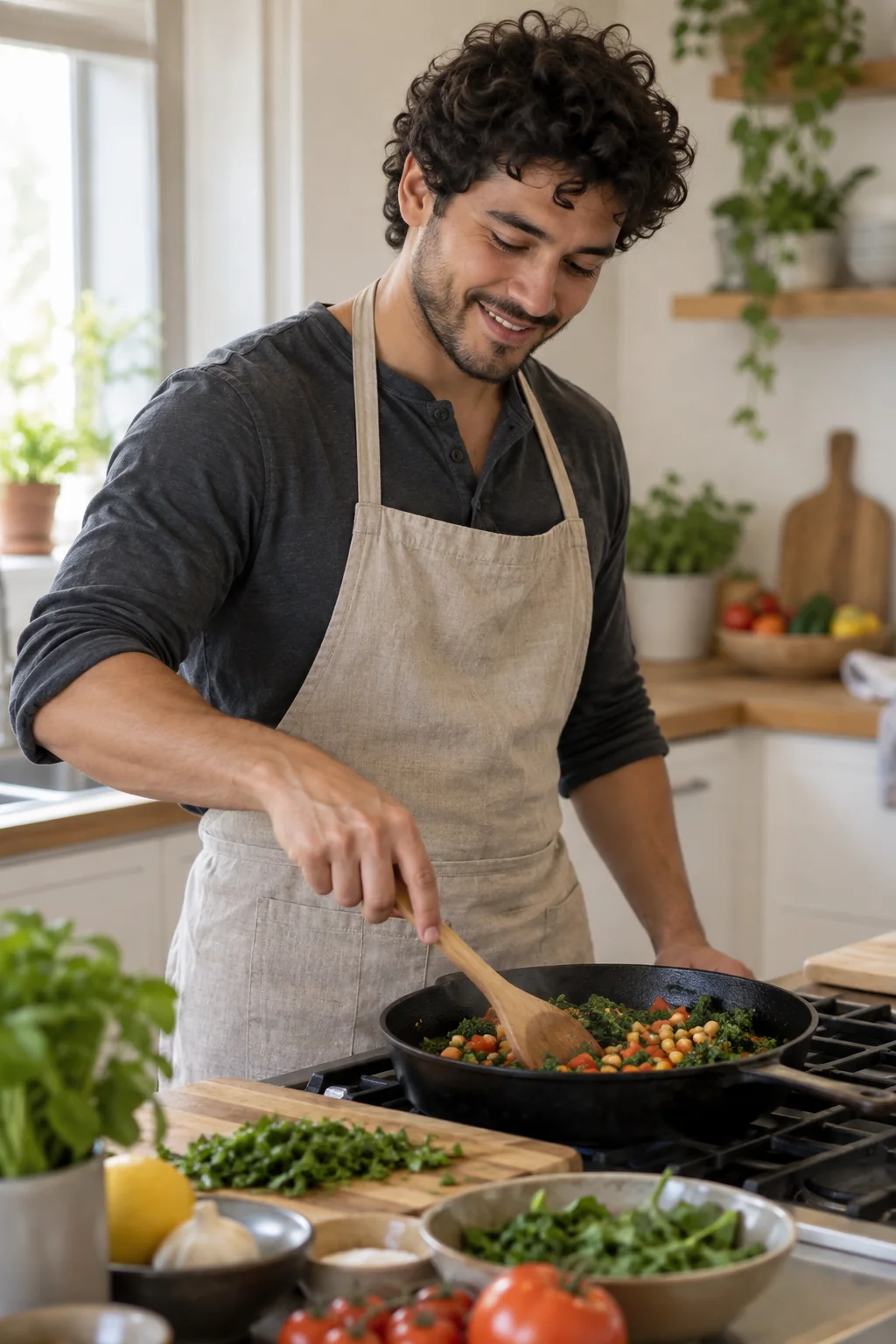
Choose a recipe you already know
Use a calm stage of cooking such as arranging ingredients, stirring away from high heat or adding herbs to a finished plate. Trying a complicated technique for the camera makes the expression less natural and introduces unnecessary risk. Prepare the work area first and move distracting packaging out of the frame.
Window light from the side gives food and faces useful texture. Turn off mixed overhead lights if they create a strong colour cast. Keep the phone away from steam and splashes, and let the photographer stand outside the working triangle between hob, sink and refrigerator.
Show enough context without exposing your home
A section of worktop, a pan and fresh ingredients are enough to communicate cooking. Crop out family photographs, mail, medicine, keys, address labels and views that identify the building. You can recreate the idea in a friend’s kitchen, a class or a rented studio if showing your home feels too personal.
Safety rule: never pose with a knife toward the camera, carry hot cookware for a photograph or leave a live hob unattended. Pause the cooking process before taking a portrait.
Write a prompt that invites a real answer
“The dish I make when friends visit…” or “A recipe I am trying to improve…” gives a match an easy question to ask. Name something you actually cook rather than claiming professional skill. The most useful prompt opens a conversation instead of trying to prove a personality trait.
Keep the image set balanced
A kitchen image can be a memorable supporting photograph, but keep a plain, current portrait first. Add other images that show your face, everyday appearance and a different part of life. Six versions of the same hobby offer less information than three distinct, accurate moments.