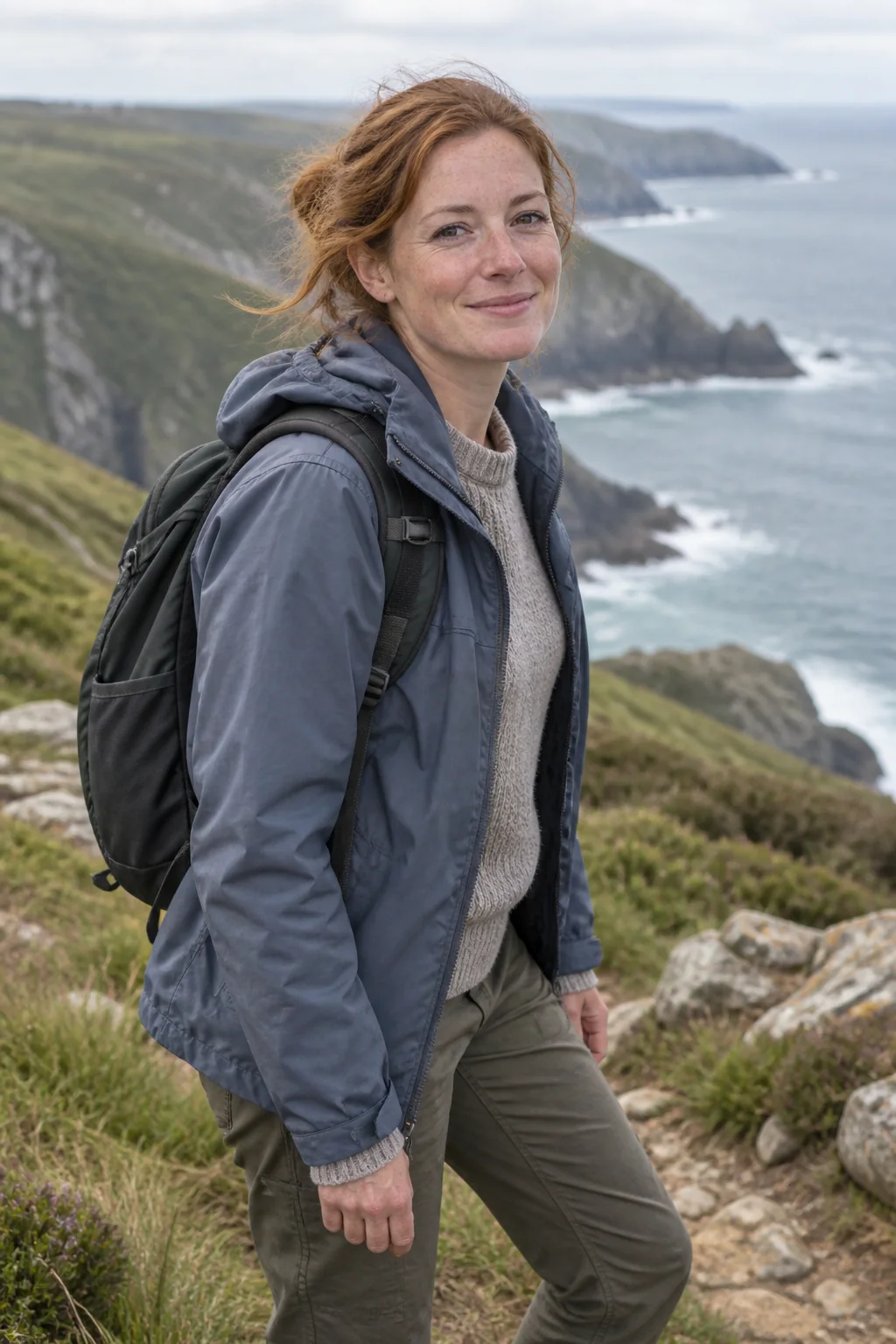
Let soft weather work for you
Thin cloud produces even light across the face and prevents the sea from becoming a bright white background. Stand with the open sky slightly to one side, keep the horizon level and take the picture from eye height. Wind can add natural movement, but wait for a moment when hair does not cover the eyes.
Stay on a safe, established path and keep well back from exposed edges. A dramatic angle is never worth unstable footing. Check tide and weather information before the walk, and do not let photography distract either person near roads, waves or steep ground.
Keep the person large in the frame
A wide landscape photograph can be a useful supporting image, but the main profile photo should clearly show the face. For a vertical portrait, frame from the knees or waist upward and leave a smaller band of coastline behind you. Avoid ultra-wide lenses close to the face because they can distort features.
Practical sequence: take one close portrait for recognition, one three-quarter image showing clothing and place, and one wider landscape frame. Use each only if it adds different information.
Connect the setting to real life
If coastal walks genuinely matter to you, say what you enjoy about them: a short Sunday route, birdwatching, photography or simply having space to think. Avoid presenting an occasional holiday as your everyday routine. Accurate context makes it easier to meet someone with compatible interests.
Protect the exact location
Remove precise location metadata and avoid including your parked car, home, accommodation or a sign that reveals a routine. A broad description such as “a favourite coastal path” provides enough conversation context without advertising when and where you are normally alone.